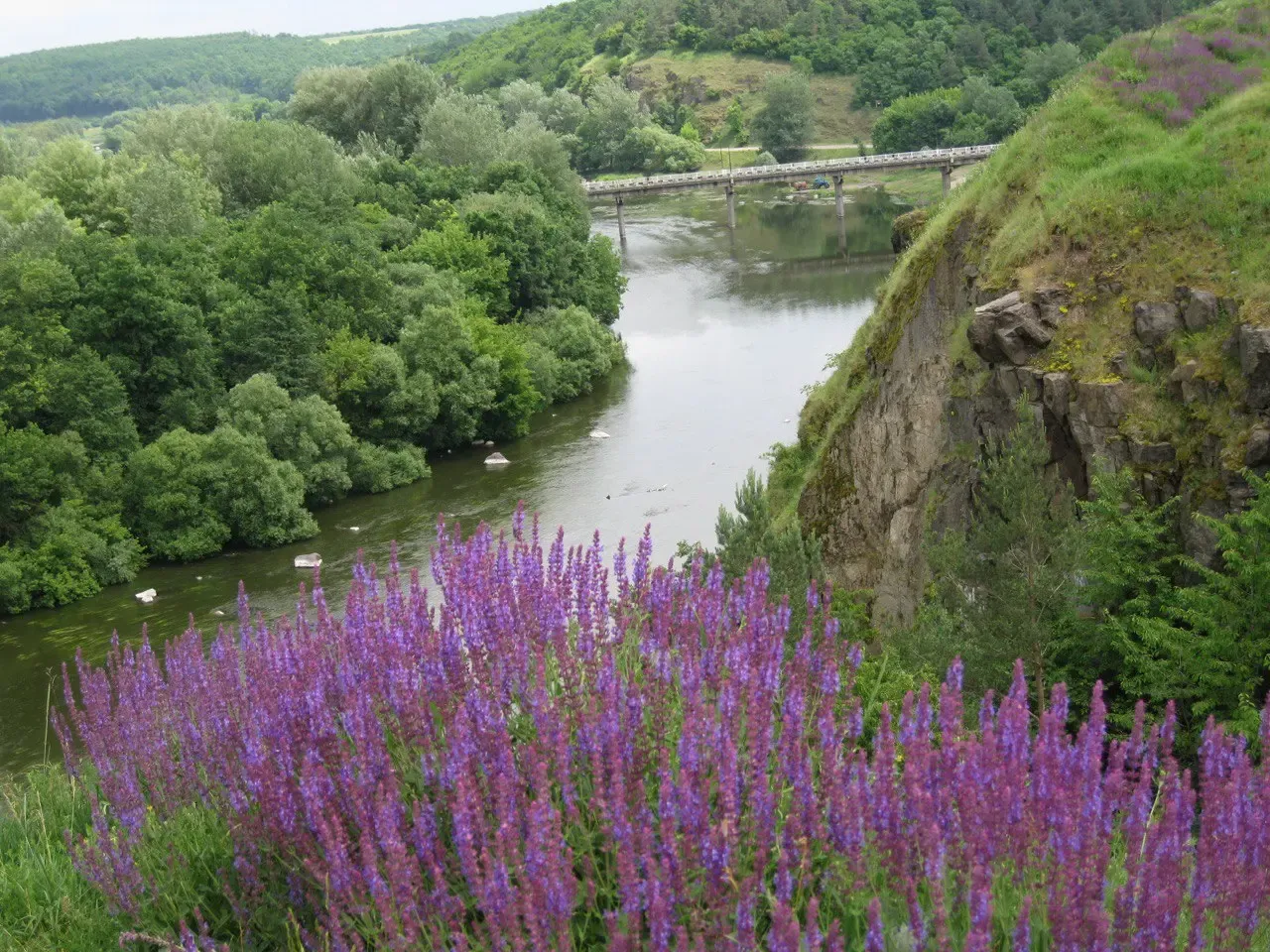
Pechera's history stretches from ancient cave dwellers and the Trypillian culture to Ottoman rulers, Polish magnates and the Soviet era, with the tragedy of a Holocaust camp in between. It is not a straight line, but layers written over each other like a historical palimpsest on the banks of the Southern Bug.
Antiquity
Traces of settlements of the Trypillian culture — one of the oldest civilizations in Europe (~4000 BCE) — have been found in this area. Burial sites from the Bronze Age have also been discovered.
Middle Ages — First Mention
The first written mention of Pechera refers to it as a possession of the powerful Zbaraski magnates within the Polish–Lithuanian Commonwealth in the late 16th century.
Ottoman Rule (1672–1699)
Under the Treaty of Buchach, Podillia passed to the Ottoman Empire. The Southern Bug River was then called Ak‑su — "white water". This was the time when Pechera became the administrative centre of a large part of Right‑Bank Ukraine.
Moldavian ruler Gheorghe Duca (1682–1683) chose Pechera as the most beautiful place in Eastern Podillia and built a fortified castle and a magnificent park here on the high bank of the Bug. After him, power passed to Hetman Yurii Khmelnytskyi, son of Bohdan Khmelnytskyi.
Although the castle itself has not survived, it served as the foundation for other structures. In 1764, stones from the dismantled Ottoman palace were used to build the foundation of the wooden Church of the Nativity of the Mother of God.
🏛️The Sveykovski Era (Early 19th Century)
In the early 19th century, Pechera passed to the heirs of Podillia voivode Leonard Sveykovski. His son Jan Sveykovski built a palace here — a copy of the famous Tulchyn Palace, only half the size.
250-Year-Old Linden Alley: A four-row alley of old lindens led to the palace, some of which survive to this day.
Grottos and Bathing Pavilions: Through the labor of serfs, grottos, artificial caves, and luxurious bathing pavilions with marble stairs were created on the banks of the Bug.
Park Ensemble: The Sveikovskis greatly expanded the park, adding "stone chaos" features and marble sculptures in the English landscape style.
Golden Age of the Potocki Estate
In the 19th – early 20th century, Pechera passed to the Potocki‑Sveykovski family. A lavish palace was built, the park was expanded, and unique architectural structures were erected, including the mausoleum designed by the famous architect Horodetsky.
📜Pechera in 1908: Census and Cultural Life
According to the 1908 census, the village had approximately 4,000 residents — twice as many as today. This was a period of great cultural flourishing:
Village Demographics
During the Soviet period, thanks to active sanatoriums, the population exceeded 2,000 people. In the 2001 census: 98.77% of residents named Ukrainian as their native language.
Soviet Period
In the 1920s, the estate was nationalised and the palace demolished. On its foundations a regional tuberculosis sanatorium was created, making use of the unique climate and relic park.
During the Soviet period the central collective farm named after Lenin managed over 2,071 hectares of land, later enlarged into the kolkhoz named after the 25th CPSU Congress under the leadership of Ivan Kalnytskyi, Hero of Socialist Labour.
⚔️Second World War — "Dead Loop" Camp (1941–1944)
On the territory of the former estate there operated a Romanian concentration camp known as "Dead Loop", in which between 11,000 and 50,000 people were killed — mainly Jews deported from Bessarabia and Bukovina, as well as local Jews.
The name "Dead Loop" was coined by 14‑year‑old prisoner Yevhenia Tsyrulnykova and captured the feeling of complete hopelessness: the camp stood between the Romanian and German occupation zones, surrounded by the river and stone walls, and leaving the "loop" alive was almost impossible.
Hunger, cold and epidemics of typhus and dysentery claimed hundreds of lives every day. When exhausted prisoners went down the 160 steps to fetch water from the Southern Bug, German soldiers on the opposite bank used them as live targets for shooting practice. Today a memorial plaque at the former camp gate, a mass grave and the old Jewish cemetery preserve the memory of those who perished here.
Notable Figures of Pechera
⭐ Ivan Kalnytskyi (1923–2006)
Hero of Socialist Labour (1971), twice awarded the Order of Lenin, deputy of the Supreme Soviet of the Ukrainian SSR. Chairman of the collective farm in 1962–1991.
Transformed the kolkhoz into a millionaire farm. Under his leadership, the village reached its demographic peak (2,377 people in 1972) and received urban-level infrastructure.
🎬 Liudmyla Alfimova (1935–2024)
Honored Artist of the Ukrainian SSR, known for her role as Yarynka in the cult film "Wedding in Malinovka" (1967).
In 1973, she came to Pechera for the filming of "Farewell, Pharaohs!" and met the kolkhoz chairman Ivan Kalnytskyi. This love changed her life — from 1993 the actress lived in the village until her death in February 2024.
🔬 Valentyna Bolokhovska (b. 1951)
Laureate of the State Prize of Ukraine (2001), PhD in biology. Born in Pechera, founder of "BTU-Center" — a leading producer of biotechnological preparations for agriculture in Ukraine.
🏺Archaeological Heritage
Pechera is an eponymous site in world archaeology: the village's name entered international scientific terminology as the "Pechera phase" of the Bug-Dniester Neolithic culture.
🔍 Pavlo Ivanovych Khavliuk (1925–2001)
Candidate of Historical Sciences, archaeologist, local historian. In 1956–1957 he discovered the Neolithic settlement in Pechera — a developed Neolithic site from the 7th–4th millennium BCE. His 1959 publication in KSIIMK introduced this discovery to academia. Over his career, he identified 1,039 archaeological sites in Eastern Podillia, including 14 Bug-Dniester culture settlements.
🏛️ Valentyn Mykolaiovych Danylenko (1913–1982)
Doctor of Historical Sciences, Professor. In 1958 he conducted excavations covering an area of ~75 m². At a depth of ~0.7 m he discovered the remains of a ground-level Neolithic dwelling with ceramic fragments, flint tools, and animal bones. In his monograph "Neolithic of Ukraine" (1969) he developed a seven-phase periodization of the Bug-Dniester culture, defining the Pechera phase as a "cultural-stratigraphic standard" synchronous with the Balkan agricultural cultures of Criș/Körös-Starčevo.
🎨Artistic Documentation
The beauty of Pechera inspired artists whose works have become historical documents:
🖼️ Napoleon Orda (1807–1883)
Polish artist and composer. Author of a watercolor depicting the villages of Pechera and Sokilets with their unique 19th-century architecture. These works are valuable historical documents that capture the appearance of Ukrainian villages before modernization.
🎨 Heorhii Vasylovych Malakov (1928–1979)
Honored Artist of Ukraine, watercolorist and graphic artist. He left a series of watercolors and drawings dedicated to Pechera: cliffs above the Southern Bug, rapids, the wooden church and the Potocki mausoleum — a visual chronicle of the village in the 20th century.
🎬Film Shooting in Pechera (1973)
In 1973, the Dovzhenko Film Studio in Kyiv chose the picturesque landscapes of Pechera for filming the feature film "Farewell, Pharaohs!" (director T. Levchuk).
Mass Scenes: Dozens of local residents participated in the filming as extras, which became a major event for the village.
Natural Scenery: The picturesque cliffs above the Southern Bug, the relic park, and architectural monuments created a unique cinematic backdrop.
20th–21st Centuries: From Kolkhoz to Resort
In the second half of the 20th century Pechera lived through the era of collective farms, the poultry station and the development of the rehabilitation hospital, while the village school grew into a full secondary school with its own museum in the former Potocki kapellmeister's house.
The agricultural cooperative that succeeded the kolkhoz was liquidated in 2012, but the hospital continues to receive 1,500–1,600 patients a year.
Today
Today Pechera positions itself as a small resort and recreational village: a place of rapids and parks, a sanatorium and holiday bases, but also a site of Holocaust memory and layered history.
The village that has lived through splendour and tragedy still finds the strength to renew itself, relying on the timeless beauty of nature and the richness of its complex heritage.
Video Materials
Documentary videos about Pechera village and its history
Journey Through Pechera
Virtual tour of the picturesque corners of the village on the Southern Bug
History and Landmarks of Pechera
Story about the architectural heritage and natural riches of the village